
Tissue Does Not Behave the Same
One assumption often made in permanent makeup is that identical needle movement should produce identical results across every client.
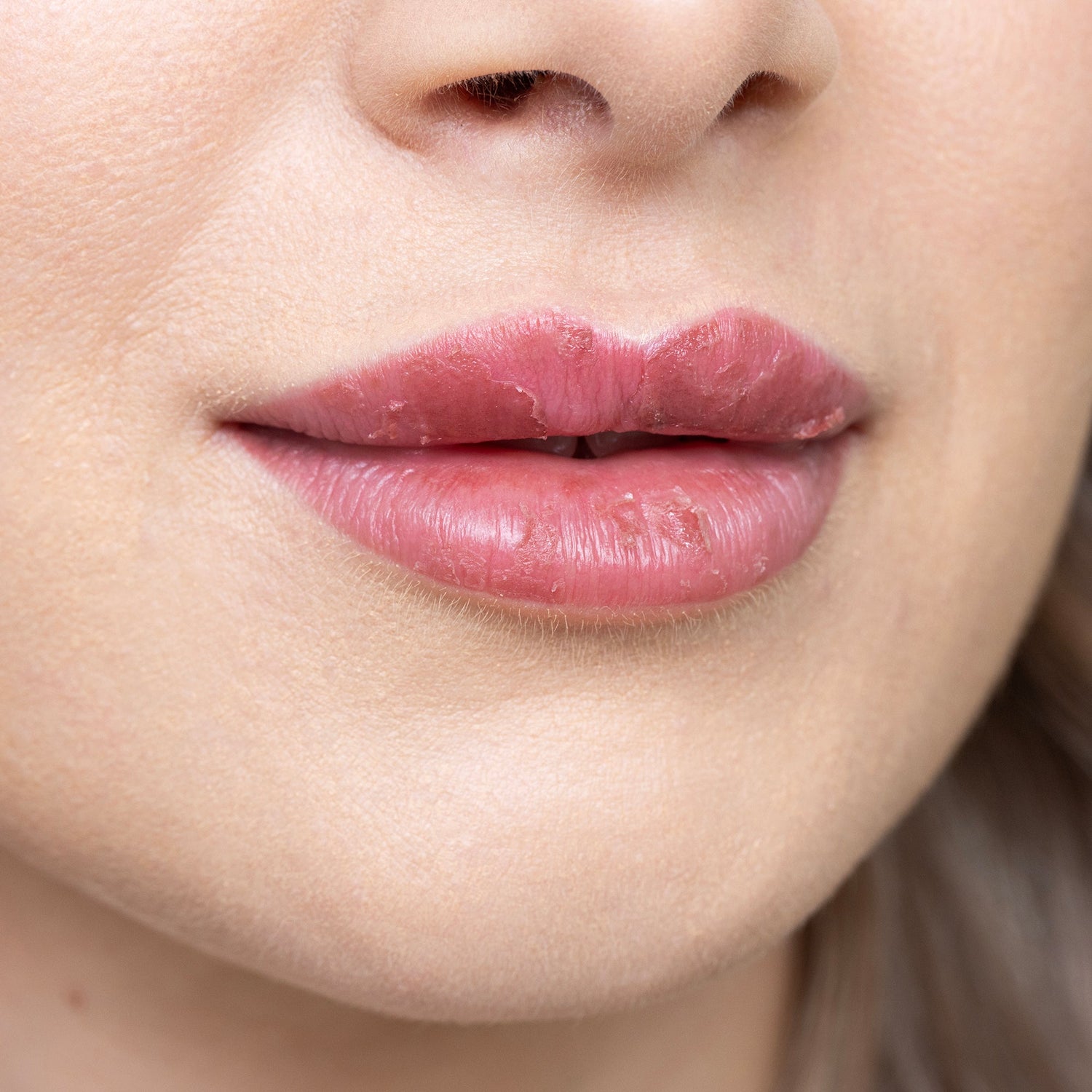
Our observations during development suggested otherwise. Living tissue is not mechanically uniform. Young skin behaves differently from mature skin. Highly elastic tissue behaves differently from fibrotic tissue. Lips following filler treatments respond differently than untreated lips. Previously inflamed tissue behaves differently from healthy tissue.
Artists often describe these differences using practical language such as "empty lips", "tight lips" or "difficult lips". "thick skin", "mature skin"
From an engineering perspective, these descriptions reflect differences in how tissue deforms, absorbs mechanical energy and returns to its original shape during implantation.
This raises an important question.
If tissue behaves differently, should the needle always behave the same?
That question became one of the starting points for analysing movement profiles rather than treating needle motion as a fixed parameter.
Not All Energy Is Used for Implantation
Every needle insertion transfers mechanical energy into the tissue. Only part of that energy contributes to pigment implantation. The remainder is absorbed by the tissue itself. How much energy is absorbed depends on the mechanical properties of the tissue at that moment.
Highly elastic tissue deforms differently than dense or fibrotic tissue.
Some tissue dissipates energy more readily.
Some stores it temporarily before returning to its original position.
These differences influence how the needle interacts with the skin throughout the implantation cycle.
Rather than asking how much energy a machine can generate, we considered a different engineering question:
How can mechanical energy be transferred more efficiently while reducing unnecessary tissue disturbance?
Why Needle Behaviour Matters More Than Stroke Length
Stroke length defines how far the needle travels. It does not define how the needle behaves throughout that movement. Two machines may share an identical 2.8 mm stroke. That does not mean they deliver identical implantation.
Acceleration.
Deceleration.
Velocity throughout the stroke.
Needle stability under load.
Contact time within tissue.
These characteristics influence how mechanical energy is transferred into the skin.
For this reason, stroke length alone cannot explain why two machines with identical geometry may produce different tissue responses or different healed outcomes.
We Did Not Develop Motion Control™ to Create a Different Feeling
One misconception is that different movement profiles exist simply to provide artists with a preferred "feel."
That was never the engineering objective.
Motion Control™ originated from analysing how different tissue conditions respond to needle movement.
The intention was not to create four different sensations in the hand.
The intention was to investigate whether needle behaviour could be adapted to different clinical situations while maintaining implantation efficiency and reducing unnecessary tissue disturbance.
Artist feedback remained essential throughout development because experienced practitioners can detect subtle differences in implantation behaviour long before they become measurable.
However, sensory feedback alone was never the objective.
It became one source of information guiding engineering decisions.
Healing Was Not the Final Test. It Was the Design Objective.
Perhaps the biggest difference in our development process was where we started.
Many machines are evaluated after they are built.
We approached development differently.
Healing was not simply something to observe at the end of the project.
It became one of the engineering objectives from the beginning.
Every significant design decision led back to the same question:
How will this influence the quality of one individual implantation?
Because a healed result is nothing more than thousands of those implantations combined.

Leave a comment
All comments are moderated before being published.
This site is protected by hCaptcha and the hCaptcha Privacy Policy and Terms of Service apply.