

In the permanent makeup industry, we often ask the wrong questions.
Which machine produces the best healed results?
Which one is the cheapest?
Which one is the lightest?
Which one is the slimmest?
Which one vibrates the least?
We also often hear that an experienced PMU artist can create beautiful pigmentation with almost any machine, and that there is no reason to spend a thousand dollars on a device because “it’s all just marketing.”
Of course, an experienced artist will usually achieve a better result with an average machine than a beginner using the most technologically advanced device. But that does not mean the machine does not matter.
You can reach your destination in almost any car. Every car will fulfil its basic function, but the comfort, control, time, stability, safety, and the way you experience the same journey can be completely different. The quality of the components, their durability, and the risk of failure can also vary significantly.
The same applies to permanent makeup machines.
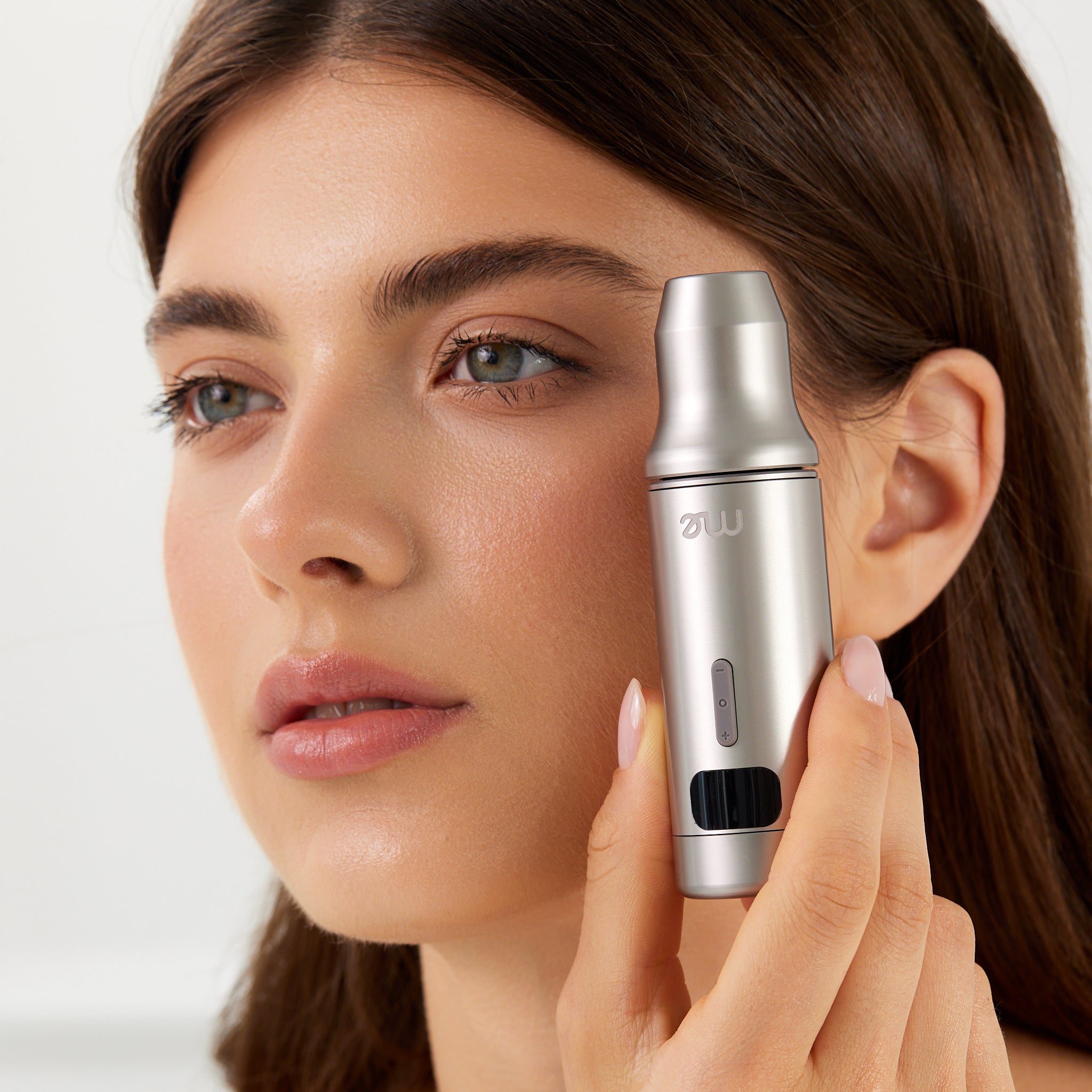
The machine is an extension of the artist’s hand. It should translate the artist’s movement, technique, and intention into needle movement as accurately as possible. It does not perform the procedure for the artist and cannot replace skill, but it can support or limit what the artist is able to achieve.
When an artist has spent years developing her technique, analyzing skin, refining her movements, and learning how to work with different tissue types, she should use a machine that allows those skills to translate as precisely as possible into a result that is actually created within the skin.
In our profession, the goal should not simply be to complete a pigmentation procedure by any means possible.
The goal should be to provide the client with the best possible result, increase comfort during the procedure, minimize pain and unnecessary tissue trauma, while creating the conditions for the artist to work with the highest possible level of precision and control.
Permanent Makeup Is a Combination of Interconnected Systems
Permanent makeup is not the result of a single product or a single decision.
It is a procedure made up of several separate but interconnected systems that can produce an exceptional result only when they are correctly combined and work together.
One of those systems is the machine.
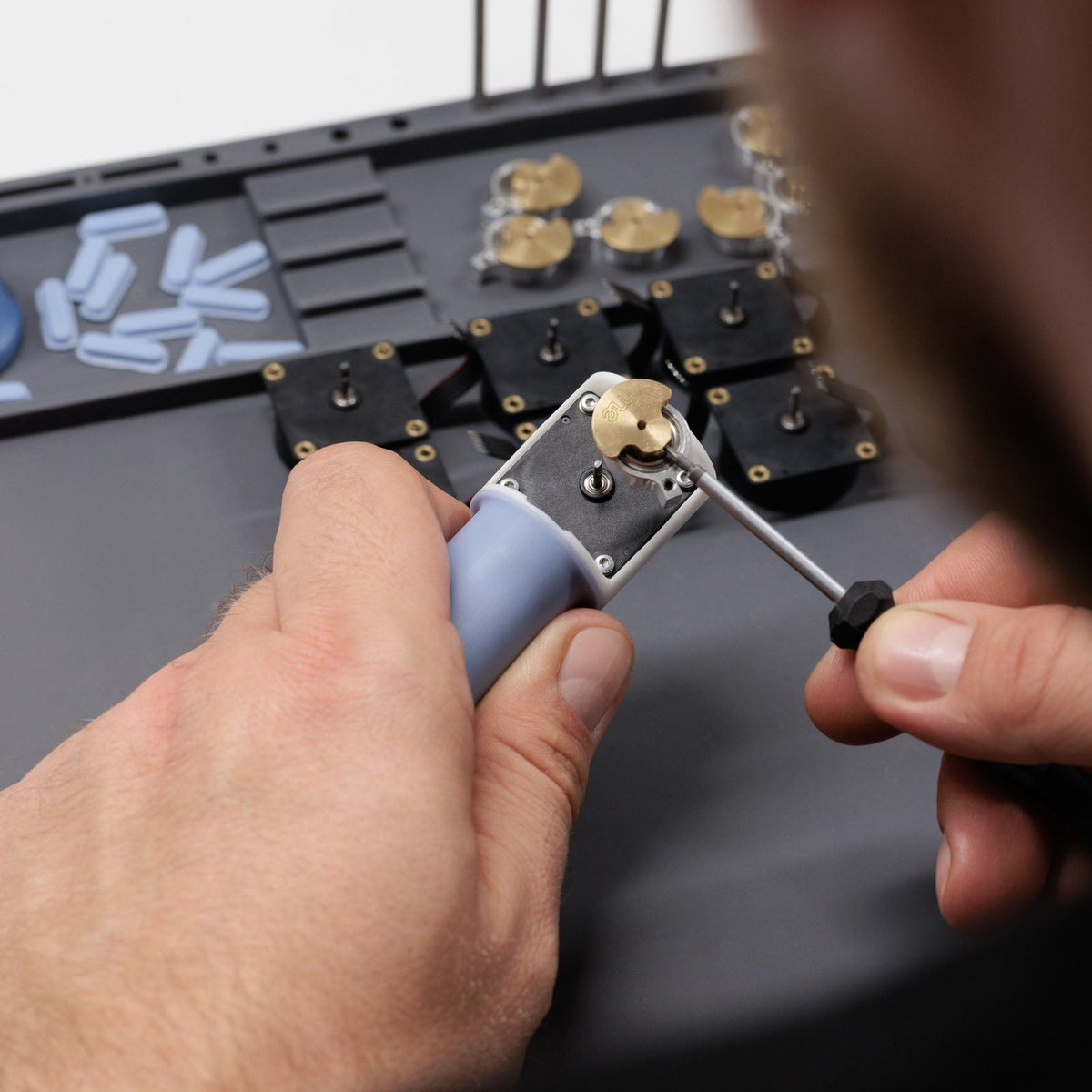
The machine itself is a closed system of components that influence one another. The motor, mechanics, electronics, control system, stroke, and needle guidance do not function independently. Each component affects the next, and it is the way they work together as a complete system that determines the machine’s overall performance characteristics.
These components can be carefully selected, engineered, and coordinated to complement one another. Or they can simply be assembled together without a deeper understanding of how their interaction will affect the machine’s behavior during actual pigmentation.
Another system is the cartridge and the way the needle behaves within it.
Then there is the pigment: its formulation, properties, and suitability for a particular skin type and technique.
Another system is the artist’s technique: movement, pressure, hand speed, skin tension, the way layers are built, and the level of control maintained during each pass.
The client is another equally important part of the process — the tissue itself, vascularity, skin elasticity, individual biological response, and the subsequent healing process.
Each of these systems is made up of smaller elements.
Within the machine, these include the motor, control system, mechanical system, stroke, needle guidance, response to skin resistance, and the way the machine behaves under load.
Within the cartridge, factors such as needle stability, membrane resistance, internal tension, and manufacturing quality all matter.
With pigment, it is not only the color that matters, but also the type of colorants used, transparency, opacity, and tinting strength.
Technique is not a single movement either. It is the sum of many small decisions made throughout the entire procedure.
Changing any one of these elements can affect the final result.
Why Is Simply Moving the Needle Up and Down Not Enough?
Many permanent makeup machines are still designed around a highly simplified assumption: the motor needs to move the needle up and down, and as long as the needle moves, the machine is doing its job.
The problem is that pigmentation does not take place in the air or in a material with constant hardness.
It takes place in living tissue.
The characteristics of that tissue change depending on the area, tension, age, vascularity, elasticity, and the way the artist moves her hand.
That is why simply making the needle move is not enough.
What matters is how the machine responds at the exact moment the needle comes into contact with the skin.
How does it behave when pressure is applied?
How does it respond to changing tissue resistance?
Does the movement remain stable?
Does the artist receive clear tactile feedback?
Can she find the optimal working range between working too superficially and applying excessive pressure?
This is where the difference becomes apparent between a machine that simply generates mechanical movement and a machine designed around the reality of working on living tissue.
For years, a significant part of the market has replicated existing solutions.
Companies looked at other companies. They compared appearance, weight, shape, and basic technical specifications.
At the same time, the market moved toward faster production, higher volumes, and increasingly lower prices. In some cases, this means cheaper components, limited quality control, and less attention being paid to how the complete system actually behaves under real working conditions.
Far less often does the development process begin by analyzing what an artist actually needs during a procedure and what happens to the machine at the moment the needle comes into contact with tissue.
The fact that a machine is lightweight, slim, or produces very little vibration does not automatically mean that it gives the artist adequate control over pigment implantation.
Pigment Visible in the Skin Does Not Always Mean Correct Implantation
The goal of a procedure is not simply to see color immediately after completing a pass.
What matters is where and how the pigment has been implanted.
During a procedure, we can create what appears to be a proper pigment deposit, but it may look correct only until the area is wiped.
The pigment may be sitting too superficially and disappear together with lymph, plasma, or excess product remaining on the surface of the skin.
The opposite can also happen.
When the artist does not see the expected implantation, she may begin compensating by working more aggressively: increasing pressure, slowing down her hand movement, or repeatedly returning to the same area.
Eventually, this can lead to bleeding, increased exudate, excessive swelling, and the formation of thicker scabs during healing.
A good machine should help the artist find the correct working range.
It should allow her to build pigmentation progressively without constantly wondering after every wipe whether the pigment has actually remained in the skin.
This is not about oversaturating the tissue with pigment or mechanically forcing as much pigment as possible into the skin by increasing pressure or working more aggressively.
It is about correct and controlled pigment implantation, where every pass has a purpose and every additional layer is added intentionally rather than being used to compensate for what was not achieved during the previous pass.
Every Microchannel Matters
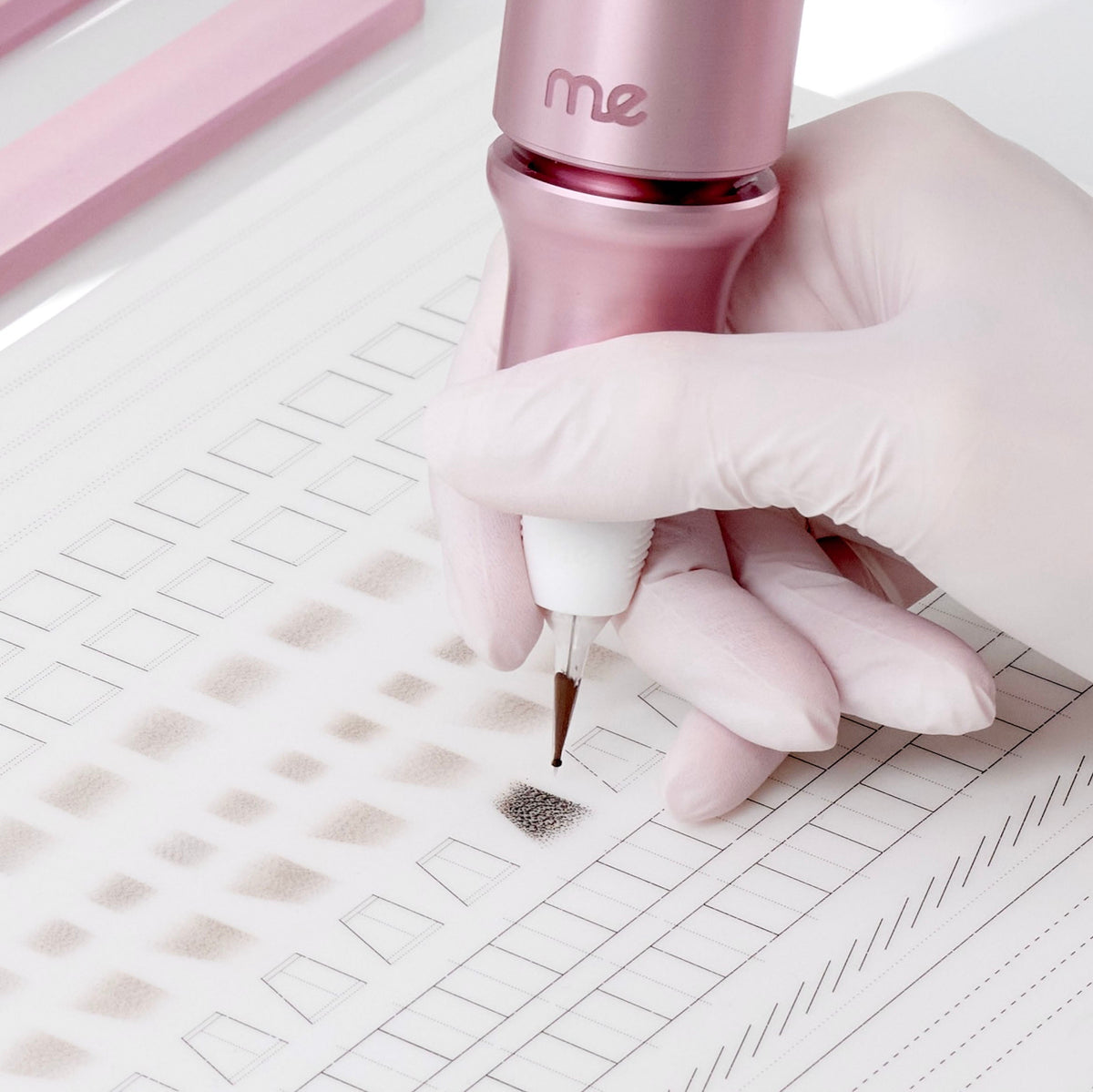
Permanent makeup consists of thousands of individual needle penetrations.
Each one creates a microchannel and allows a certain amount of pigment to be deposited.
A single dot is the smallest element of the entire pigmentation.
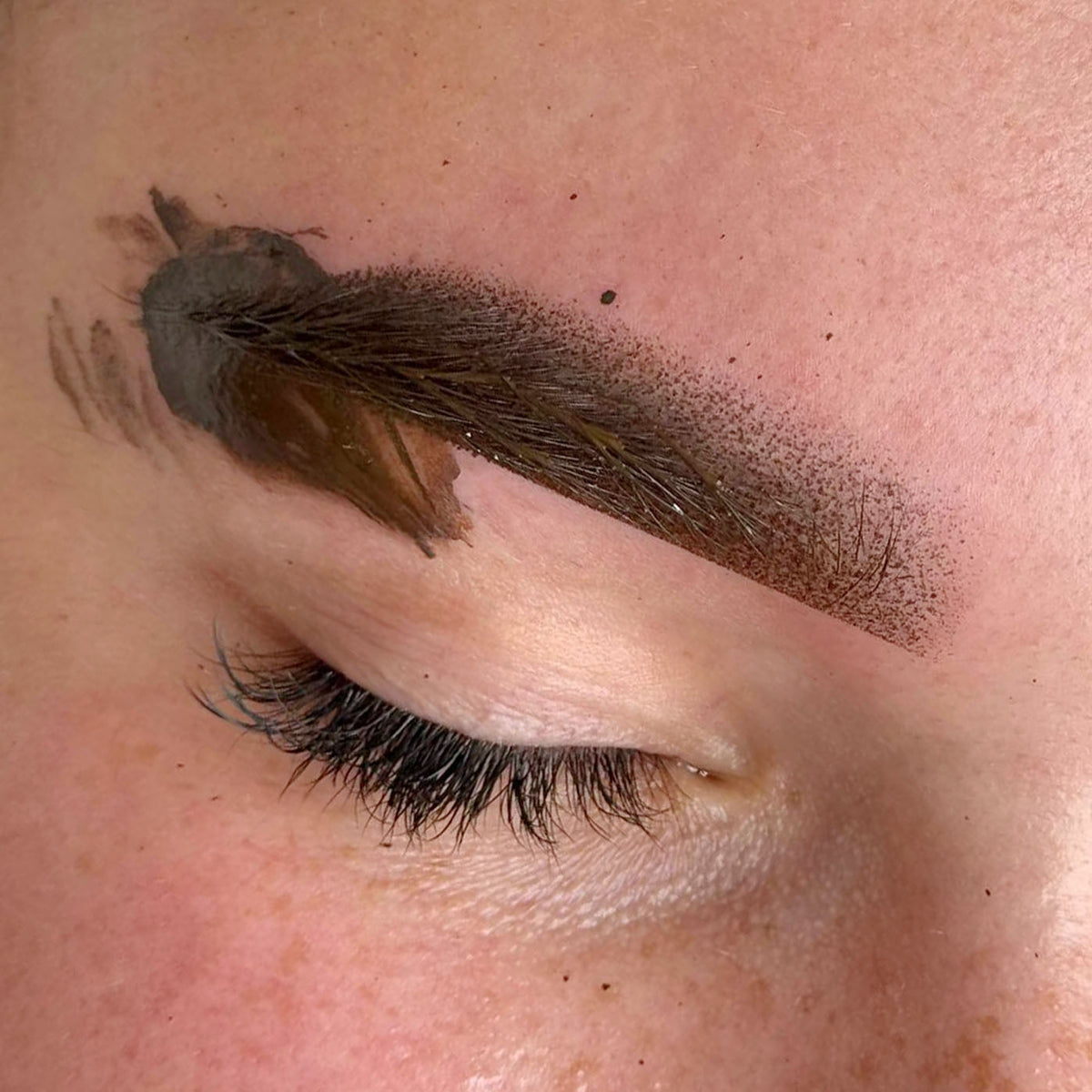
But those individual dots create a line, a hairstroke, a pixel, a gradient, a tonal transition, and ultimately an entire layer of color.
When needle movement is repeatable, predictable, and controlled, the artist can consciously build the result.
When the machine responds inconsistently, every dot can have a different character, and the artist begins compensating for the machine with her hand.
She increases pressure.
She repeatedly returns to the same area.
She performs additional passes.
She changes her movement.
Not because the tissue requires it, but because she is trying to achieve a result that the machine’s behavior does not allow her to create in a simple and predictable way.
That is why attention to detail is not excessive.
It is the foundation of quality.
We can accept average results, blame them on difficult skin, competition, or individual client characteristics, and look for reasons why certain results cannot be achieved.
Or we can analyze every part of our work and consciously choose solutions that allow us to keep improving.
The Way a Machine Responds to Pressure Changes the Way We Work
Not every machine behaves the same way when the artist increases hand pressure.
In many designs, the machine will continue to mechanically drive the needle into the tissue even when the operator begins applying excessive pressure.
The movement will not stop simply because the tissue is already being overloaded.
If the artist has not yet developed sufficient sensitivity in her hand, or if the machine does not provide clear tactile feedback, it is very easy to move outside the optimal working range.
In the ME™ machine, the response under load was designed differently.
When excessive pressure is applied, the machine no longer behaves or feels exactly the same as it does during correct operation. Its character becomes noticeably softer, and it partially yields under load, giving the artist tactile feedback that she has moved beyond the optimal working range.
This does not remove the artist’s responsibility for proper technique.
The artist still needs to learn the machine and identify the correct working range — the boundary between controlled skin contact and excessive pressure.
It is within this range that light, intentional, and effective work becomes possible.
Once the artist finds this range, she does not need to fight against the machine or wonder after every wipe whether the pigment has remained in the skin.
She can focus on the tissue, observe its response, and gradually build the pigmentation without unnecessarily overworking it.
The goal is not for the machine to perform the procedure for the artist.
The goal is for it to support correct movement, provide clear feedback, and limit the direct transfer of excessive hand pressure to the needle.
Why Was the ME™ Machine Created?
The development of the ME™ machine took four years.
It did not begin with a decision to create another device with a different shape, another color, or a lower weight.
It began by working with machines that were already available, analyzing their behavior, and observing the problems artists repeatedly encountered during procedures.
The main question was not:
How do we make a needle move up and down?
That problem was solved many years ago.
The real question was:
How do we create a machine that responds to living tissue in a way that allows the artist to work lighter, more precisely, and more predictably?
How do we design the entire system so that hand movement, motor response, internal mechanics, the control system, the cartridge, and skin resistance do not work against one another?
That is why we do not look at a machine as simply a motor enclosed inside a housing.
We see it as a system of interdependent components.
Changing one component affects the others.
A motor can be excellent, but if it does not work correctly with the mechanical system and control system, the motor alone will not create a good machine.
Likewise, a high-quality mechanical system is not enough if its behavior is not properly coordinated with the electronics, software, stroke, and the machine’s response under load.
It is the way all of these elements work together as one system that creates the machine’s operating characteristics — the characteristics the artist ultimately feels during pigmentation.
A Machine Will Not Replace the Artist, but It Can Change the Level of Her Work
Even the best machine will not correct poor technique, select the right pigment, or analyze the skin.
But it can allow the artist to use the skills she already has far more effectively.
It can make the path to correct pigment implantation more direct, reduce the number of unnecessary passes, decrease stress during the procedure, and allow the artist to focus on the result instead of constantly compensating for the behavior of the machine.
That is why the machine has a real impact on permanent makeup results.
It is not the only factor, but it participates in every single needle penetration.
It affects how the needle behaves when it comes into contact with the skin, how the machine responds under load, how many times the artist needs to return to the same area, how the tissue responds, and whether the intended technique can be performed exactly as the artist intends.
It is possible to achieve good pigmentation with a budget machine.
But that is not the real question.
The real question is: if the machine participates in every single needle penetration performed during a procedure, why should an artist who wants to provide services at the highest possible level consider the choice of her machine a secondary factor?


Leave a comment
All comments are moderated before being published.
This site is protected by hCaptcha and the hCaptcha Privacy Policy and Terms of Service apply.