
Why Are Lips Red After Permanent Makeup, Even If You Chose a Nude Color?
Imagine this situation.
Before your appointment, you and your artist carefully choose a soft nude shade. You are not looking for the look of lipstick. You simply want to enhance your natural lip color in a subtle way.
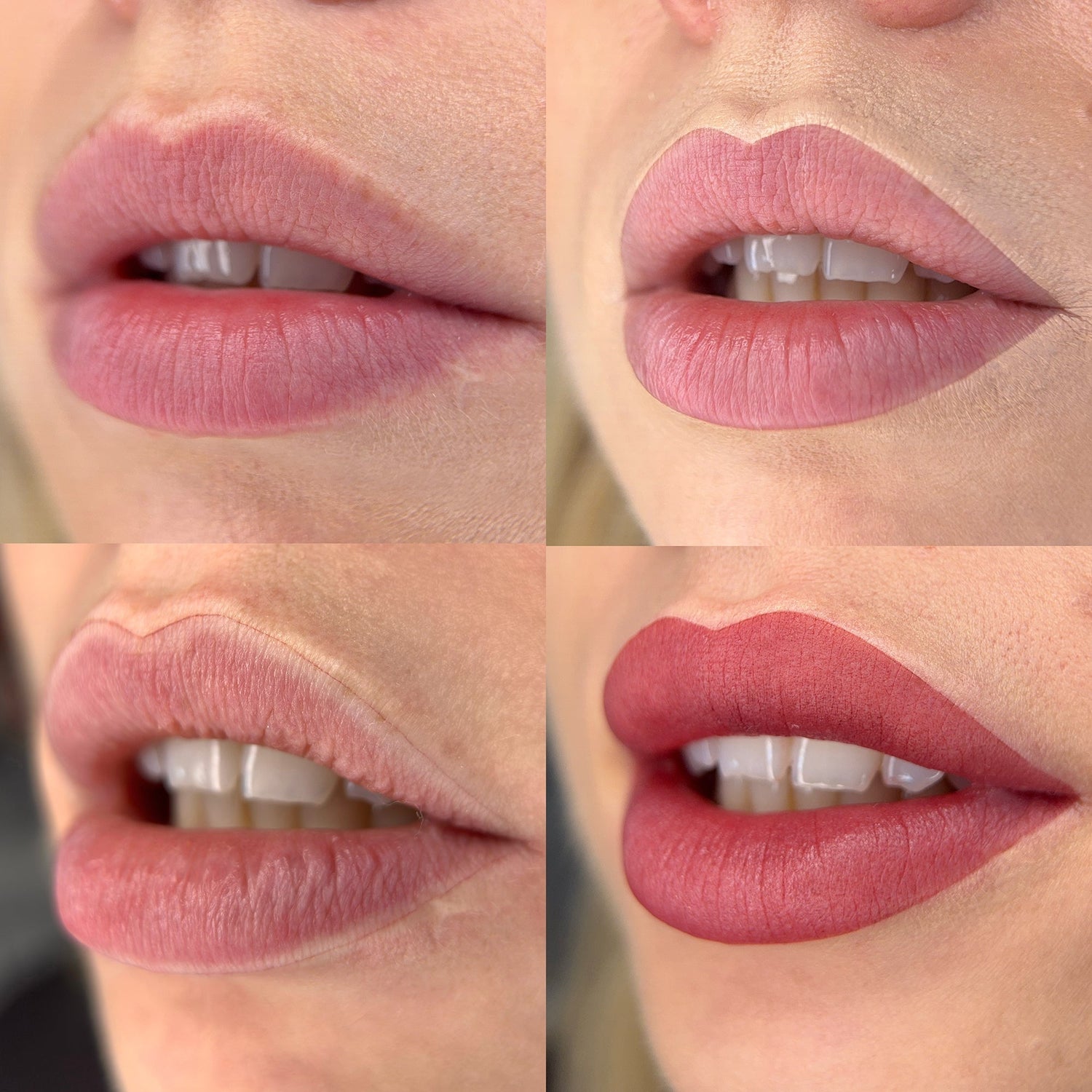
The procedure is finished, you look in the mirror... and your lips appear bright pink or even red.
This is one of the most common reasons clients wonder whether the wrong pigment was used.
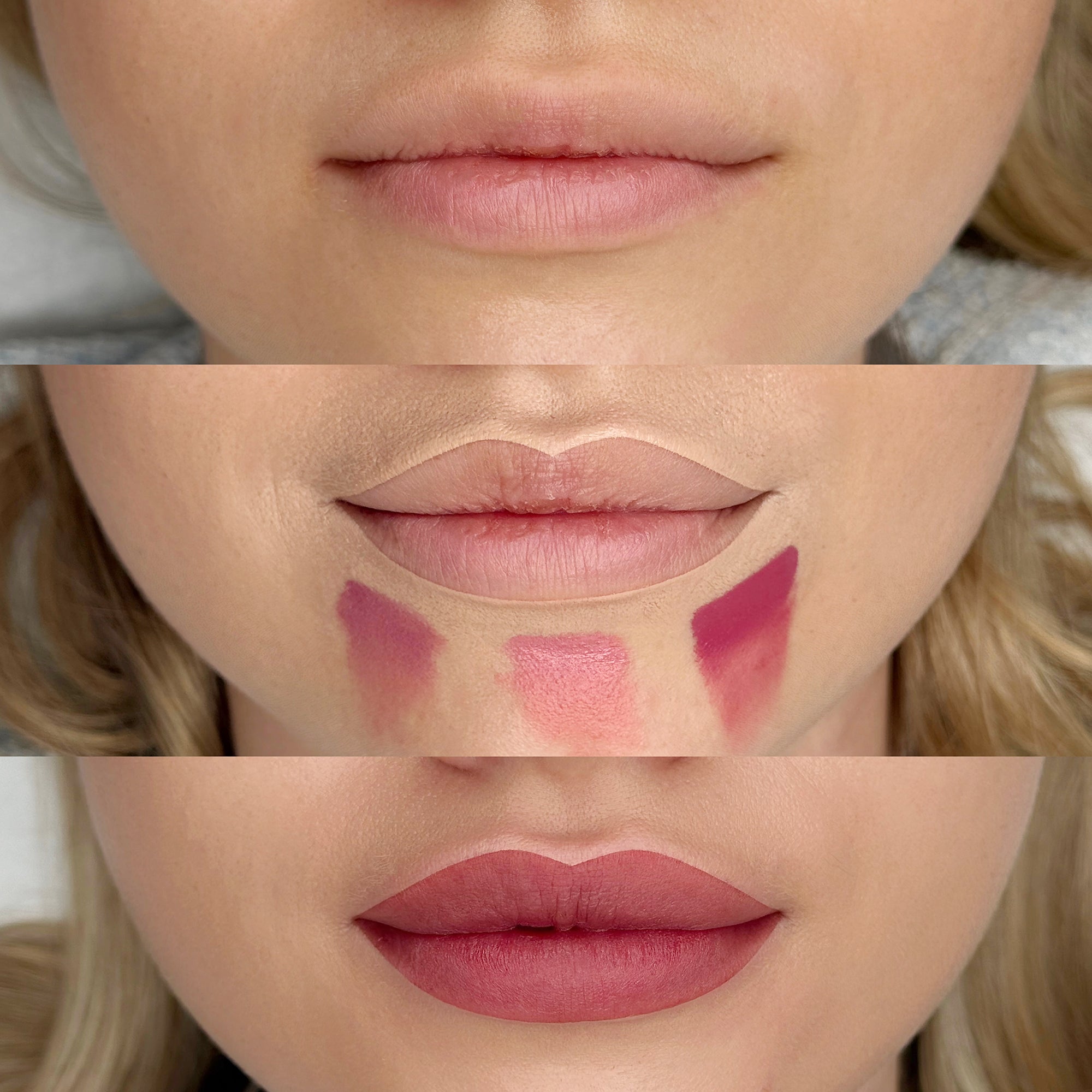
In reality, the color you see immediately after the procedure is not the final healed result. It is the combination of several processes happening at the same time—both within the tissue and within the pigment itself.
Permanent makeup pigment does not work like lipstick
This is one of the most important concepts to understand. Permanent makeup pigment is not lipstick, a lip pencil or a lip stain. It is not applied onto the surface of the lips.
During the procedure, the pigment is implanted into the tissue through thousands of controlled micro-punctures. This means the final color is always the result of the interaction between the pigment, your natural lip color and the characteristics of your skin.
For this reason, the final outcome cannot be predicted simply by looking at the color inside the bottle.
Most lip pigments contain organic colorants
Modern lip pigments are primarily formulated with organic colorants.
These colorants are responsible for the wide variety of shades available—from cool nude tones and soft pinks to vibrant corals and reds.
However, every organic colorant has its own unique properties.
They differ in:
-
color temperature,
-
tinting strength,
-
transparency.
By combining different organic colorants in specific proportions, manufacturers can create pigments with completely different characteristics, even if two shades appear very similar at first glance.
Lip pigments may also contain inorganic pigments such as titanium dioxide or red iron oxide. These ingredients mainly influence the opacity and overall character of the formulation.
Transparency plays a major role
Two clients may both ask for nude lips, yet they may be expecting completely different results.
One may want nothing more than a subtle enhancement of her natural lip color.
The other may be looking for a more uniform, lipstick-like finish.
This is where transparency becomes extremely important.
More transparent pigments allow the natural vermilion of the lips to remain visible, creating a lighter and more natural appearance.
Pigments with greater opacity provide more coverage and create a more uniform color.
Choosing the right pigment is therefore not simply about selecting a beautiful shade. It is about designing the healed result you want to achieve.
So why do the lips look red immediately after the procedure?
During a permanent lip procedure, thousands of controlled micro-punctures are created.
Each puncture forms a tiny microchannel where the pigment is implanted.
At the same time, the body begins its natural healing response. Blood vessels dilate, blood flow increases and a temporary inflammatory response develops as part of the normal repair process.
The vermilion border is one of the most highly vascularized areas of the body, which is why this reaction is especially noticeable on the lips.
Immediately after the procedure, what you are actually seeing is the combination of:
-
the tissue's natural response,
-
increased blood circulation,
-
freshly implanted pigment.
This is why even a very soft nude pigment can temporarily appear much brighter and redder than expected.
A natural result is the most difficult to achieve
Many people assume that creating bold red lips is more challenging than creating a soft nude effect.
In reality, the opposite is often true.
The greatest level of experience is required to create lips that enhance the natural vermilion, even out the color and add freshness without making the lips look obviously tattooed or heavily made up.
To achieve this, a permanent makeup artist does much more than simply choose a pigment.
They evaluate the client's natural lip color, skin tone, desired level of coverage and the properties of individual colorants before selecting the most appropriate formulation.
This is why two clients receiving the same pigment may still achieve different healed results.
Conclusion
Bright red lips immediately after a permanent makeup procedure do not mean the wrong pigment was chosen.
They are a natural visual effect created by the combination of the tissue's response and the properties of the pigments used during the procedure.
Permanent makeup pigment does not behave like lipstick applied to the surface of the lips. It is implanted into living tissue, and its final appearance depends on many factors, including the type of colorants used, their transparency, their opacity and the client's natural lip color.
For this reason, the appearance immediately after the procedure should never be considered the final result.
The goal of an experienced permanent makeup artist is not simply to choose a beautiful pigment, but to design a healed result that harmonizes naturally with each client's individual features.



Leave a comment
All comments are moderated before being published.
This site is protected by hCaptcha and the hCaptcha Privacy Policy and Terms of Service apply.