

One of the most frequently asked questions in permanent makeup is:
Which PMU device produces the best healed results?
The question itself assumes that the healed result is determined by the machine.
It is not.
Healing is a biological process influenced by many variables:
-
implantation technique,
-
working depth,
-
number of passes,
-
skin-stretching technique,
-
tissue characteristics,
-
pigment type and composition,
-
cartridge quality and design,
-
aftercare,
-
the client’s individual healing response.
The machine is one part of this system. It cannot guarantee a healed result, nor can it replace the artist’s skill.
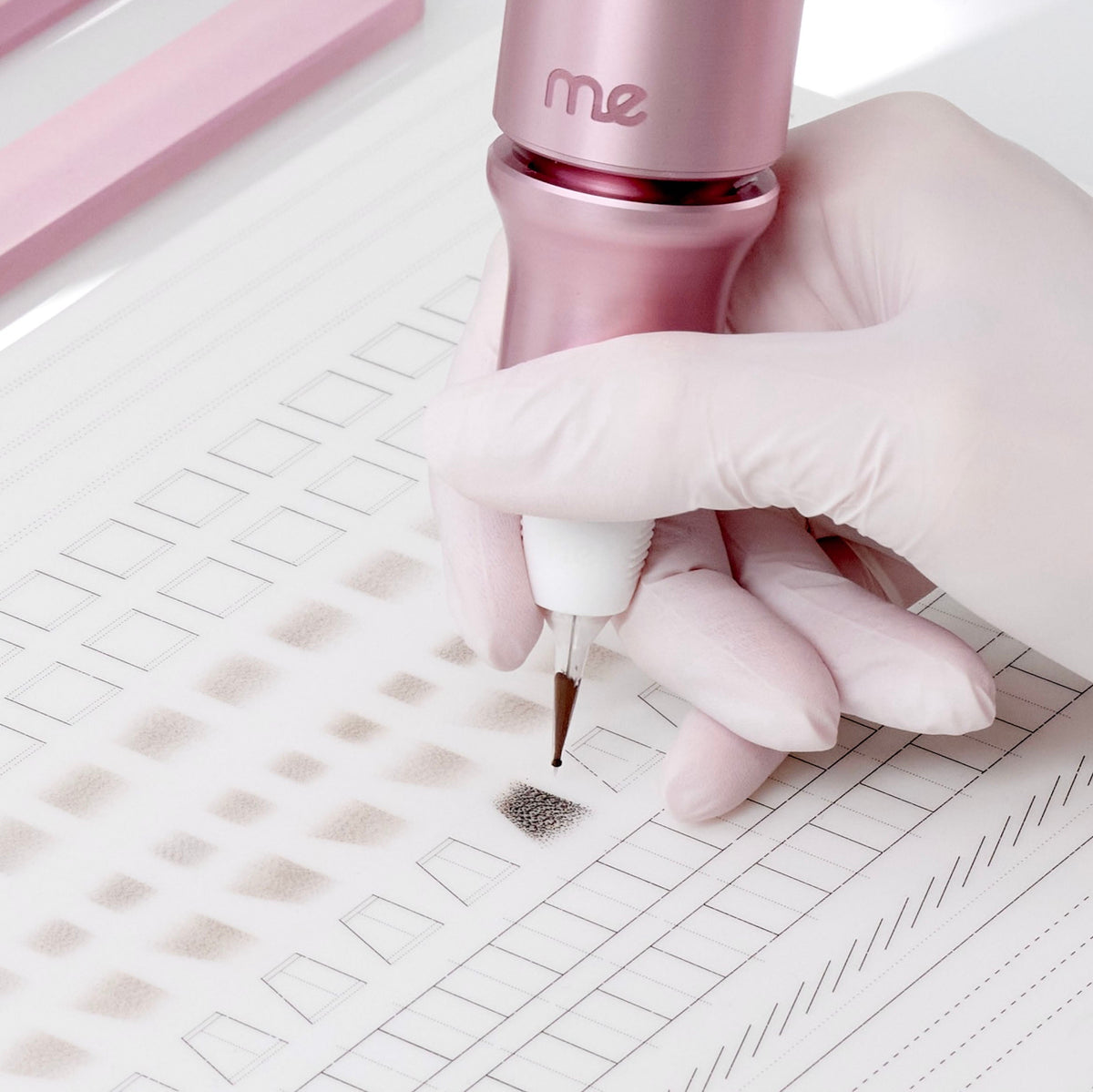
However, it is the tool that drives the needle during every single penetration. The stability and manner in which it performs this movement influence the conditions in which the artist implants pigment.
That is why a machine should not be evaluated solely by its appearance or by how it behaves in the air. What matters far more is how the complete system performs under load—in contact with living, constantly changing tissue.
A Healed Result Is Not Created Only After the Procedure
The biological healing process continues after pigmentation is complete. However, the conditions in which the tissue will heal are created during the procedure itself.
Every time the needle enters the skin, it transfers mechanical energy into it. Some of that energy is necessary for the needle to overcome tissue resistance and deposit pigment.
However, if the tissue is subjected to more needle penetrations, greater pressure, or additional passes than effective implantation requires, the extent of mechanical trauma that the body must manage during healing also increases.
The goal, therefore, is not simply to place pigment in the skin.
The goal is to achieve the intended implantation while keeping tissue trauma as minimal and controlled as possible.
That is an important distinction.
Every Result Is the Sum of Thousands of Individual Interactions
We usually talk about permanent makeup in terms of complete eyebrows, lips, or eyeliner.
Mechanically, however, every procedure consists of thousands of individual interactions between the needle, pigment, and tissue.
Each penetration may be different. The needle may encounter a different level of resistance, while the tissue may deform, shift, and respond to the delivered energy to varying degrees.
A single difference may appear insignificant. But when repeated thousands of times during one procedure, it begins to matter.
The final result is the cumulative effect of all these interactions.
This became one of the guiding principles in the development of ME™.
Instead of analysing the procedure only as a whole, we focused on the behaviour of a single needle movement—because every improvement to that movement, repeated thousands of times, can influence the entire procedure.
Specifications Describe the Device. They Do Not Describe the Entire Implantation Process.
Most PMU machines are compared using several parameters:
-
voltage,
-
RPM,
-
frequency,
-
stroke length,
-
motor type,
-
battery capacity.
All these parameters matter. However, none of them operates independently of the other components of the design.
The same stroke length may behave differently in two different machines. The same voltage does not mean the same speed, energy delivery, or behaviour under load. A similar RPM value does not describe the stability of the needle movement once it enters the tissue.
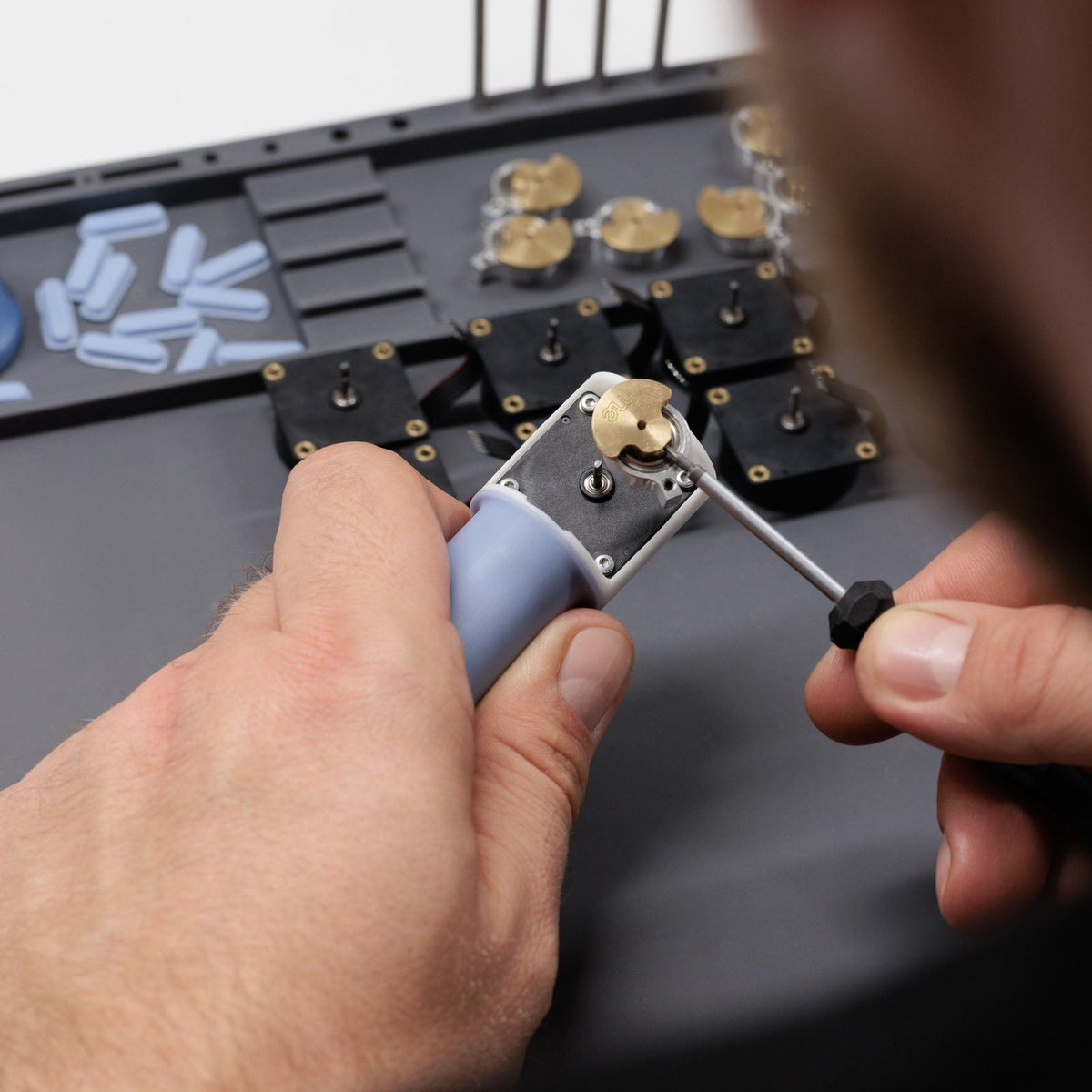
The result is influenced by how the entire system works together:
-
the motor,
-
the mechanical assembly,
-
the motion-transfer system,
-
the control system,
-
the software,
-
the power supply,
-
the cartridge design,
-
the needle,
-
the artist’s hand.
That is why a single specification does not tell you how a device will perform in the skin.
What Happens When the Needle Encounters Resistance?
A needle moving freely in the air operates under different conditions from one entering living tissue.
Once implantation begins, resistance changes almost continuously. It is influenced by factors including:
-
skin elasticity,
-
skin thickness and density,
-
hydration level,
-
vascularity,
-
fibrosis and scarring,
-
the client’s age,
-
the treatment area,
-
previous procedures and the presence of fillers,
-
the way the tissue is stretched,
-
the design of the cartridge being used.
Lips with fillers may behave differently from natural lips. Mature skin responds differently from younger skin. Thin, elastic, highly vascular tissue presents different requirements from dense or fibrous skin.
The machine therefore does not operate under constant laboratory conditions. It works within a dynamic biological system.
If the drive system does not maintain stable performance as resistance changes, the needle’s actual movement may differ from what the artist expects. The artist then begins to compensate for the device’s behaviour by changing pressure, slowing down hand movement, increasing the number of passes, or repeatedly returning to the same area.
Each such compensation can introduce additional variables into the procedure.
The right engineering question, therefore, is not:
How fast does the machine move the needle in the air?
It should be:
How predictably does the system drive the needle when it encounters the changing resistance of living tissue?
That question cannot be answered solely on the basis of RPM, voltage, or stroke length.
Colour Visible Immediately After the Procedure Can Be Misleading
Immediately after a procedure, pigment is visible on the surface and within the disrupted tissue. It may be accompanied by redness, swelling, lymphatic fluid, and other elements of the temporary post-treatment response.
This can create the appearance of intense, even colour.
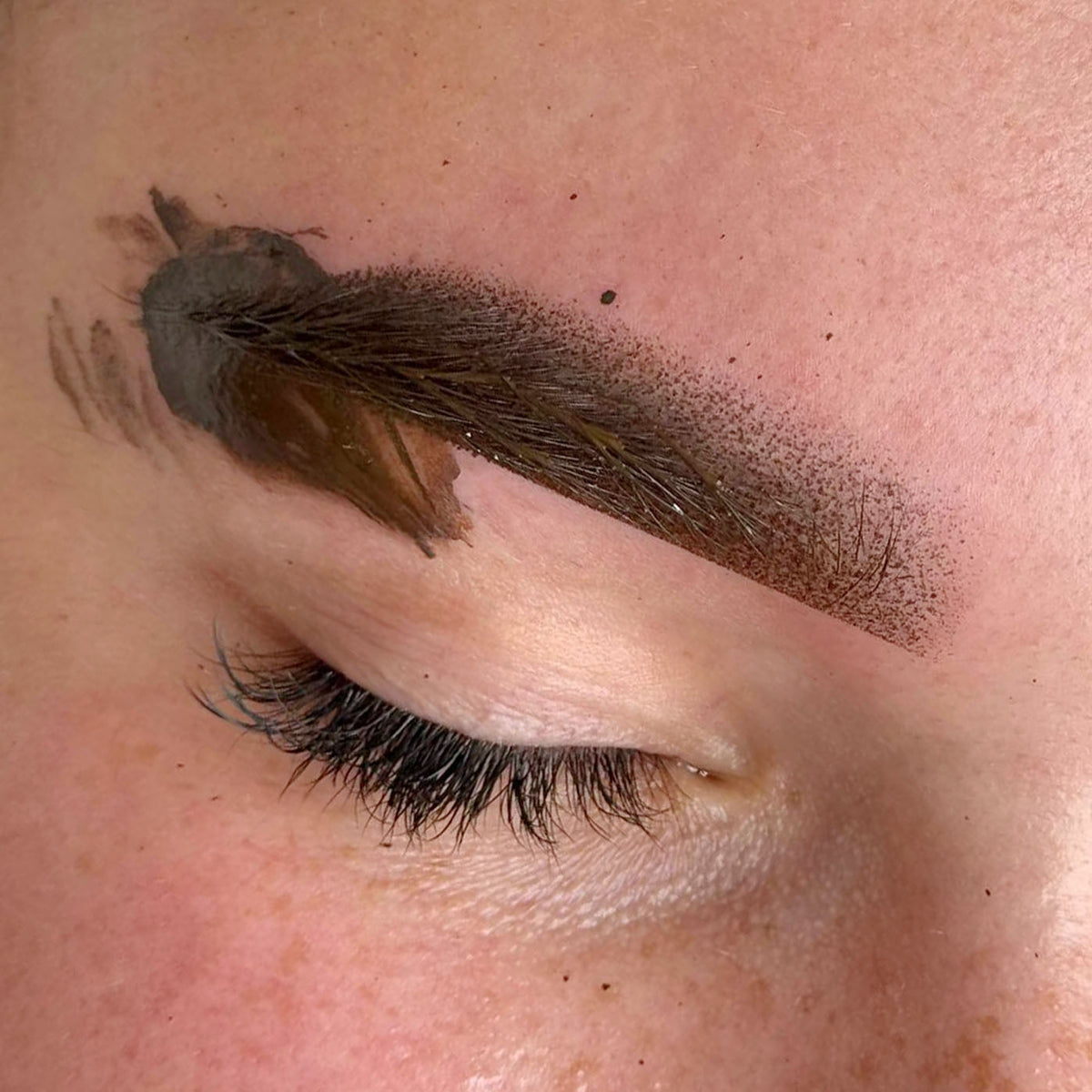
However, it does not automatically mean that the result will look exactly the same once healed.
Some of the visible pigment will be removed as the superficial layers of the skin naturally regenerate. Some may be lost during the healing process. The inflammatory response, which affects the appearance of both the colour and tissue immediately after the procedure, will also subside.
Only after healing can the following be properly assessed:
-
actual pigment retention,
-
implantation consistency,
-
saturation,
-
shape stability,
-
tissue response,
-
whether a touch-up is required.
That is why an immediate post-procedure result and a healed result are not the same.
More Passes Do Not Always Mean Better Retention
One common misconception in PMU is that additional passes will automatically increase the amount of pigment retained in the skin.
However, every additional pass means another series of needle penetrations and more stress on the tissue.
If the pigment is not being implanted as intended, the solution is not always to go over the same area again. The cause should be identified first:
-
incorrect depth,
-
an improper working angle,
-
inadequate stretching,
-
incorrect hand speed,
-
an unsuitable needle configuration,
-
a cartridge issue,
-
mismatched settings,
-
unstable device performance under load.
The goal is not to maximise the number of passes.
The goal is to improve the effectiveness of every movement while maintaining control over the tissue.
Implantation and tissue damage are not the same thing. It is possible to make many passes and still fail to achieve proper implantation. It is also possible to cause excessive tissue trauma without a proportional improvement in retention.
Why Did Tissue Response Become an Engineering Objective?
Throughout the development of ME™, we repeatedly returned to one question:
Why can procedures performed by experienced artists heal differently, even when similar techniques and the same pigments are used?
There is no single answer. Every client’s tissue is different, and the result is influenced by many factors.
This question did, however, shift our attention from individual specifications to the behaviour of the complete system.
We began analysing:
-
how the needle behaves under load,
-
how the system responds to changes in resistance,
-
how mechanical energy is transferred to the tissue,
-
how repeatable the movement remains throughout the procedure,
-
when the artist begins to compensate for the machine’s behaviour,
-
how different configurations affect the response of different tissue types.
Healing was not something we intended to evaluate only after the device had been designed.
The conditions created in the tissue during the procedure became one of the factors shaping the development process itself.
Maximum Power Was Never the Goal
More power does not automatically mean more effective implantation.
Living tissue does not respond to a number printed in a specification. It responds to the needle’s actual movement, contact time, the way resistance is overcome, and the amount of energy transferred during each penetration.
A system that is too weak may require the artist to compensate for its performance. Conversely, overly aggressive behaviour may increase the risk of unnecessary tissue trauma.
The goal, therefore, is not maximum power.
The goal is appropriately controlled energy and predictable needle behaviour under real treatment conditions.
For this reason, during the development of ME™, we did not focus on achieving the highest RPM or the greatest nominal value.
We focused on how the device performs in the skin.
Engineering Cannot Replace Technique
No machine can compensate for:
-
incorrect depth,
-
improper skin stretching,
-
an incorrect working angle,
-
an unsuitable needle configuration,
-
excessive pressure,
-
an incorrect assessment of the tissue,
-
a lack of artist experience.
Technology cannot replace knowledge or education.
Its role is different.
The machine translates the movement of the artist’s hand into the movement of the needle. It is an extension of the hand and one of the most important tools used during the procedure.
Choosing a device solely because it looks good, is inexpensive, or “only moves the needle up and down anyway” overlooks the most important questions:
-
how the machine behaves under load,
-
how it responds to changing resistance,
-
how consistently it reproduces the intended movement,
-
how much compensation it requires from the artist,
-
how it works with different cartridges,
-
how it affects the working process in different tissue types.
These differences cannot always be seen in a photograph or found on a specification sheet.
They can, however, be felt during the procedure and observed in the tissue response.
What Question Should We Ask Instead?
Not: Which machine produces the best healed results?
A better question is: Which machine allows me to translate my technique most accurately into controlled, repeatable work in the tissue?
A good device cannot guarantee perfect healing.
It can, however, reduce the number of unnecessary variables. It may require less compensation, perform more consistently under load, and create better conditions for applying proper technique.
Predictable engineering cannot replace experience, proper skin assessment, or a correctly performed procedure.
It can, however, create better conditions for good technique to produce more consistent results.
The machine does not create a healed result on its own. But the way it performs every single needle penetration matters to the procedure as a whole.



Leave a comment
All comments are moderated before being published.
This site is protected by hCaptcha and the hCaptcha Privacy Policy and Terms of Service apply.